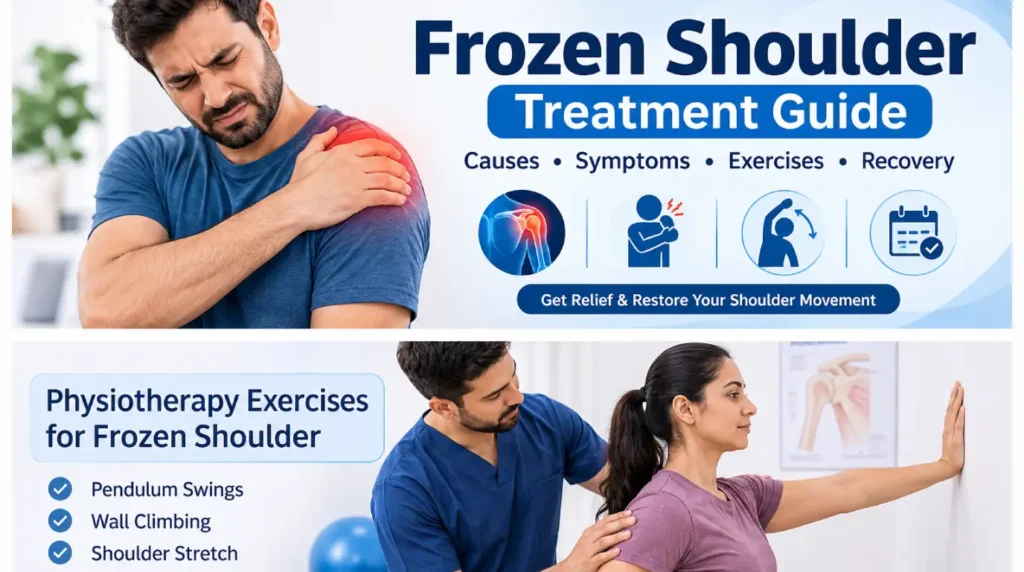

Frozen Shoulder Treatment Guide
Have you ever struggled to reach a shelf, put on a shirt, or lift your arm because of shoulder pain and stiffness? These everyday difficulties may be signs of frozen shoulder. Frozen shoulder is a condition that causes pain, stiffness, and restricted movement in the shoulder joint. Simple activities like reaching overhead, getting dressed, or sleeping on the affected side can become difficult. The condition usually develops gradually and may take months to improve.
Understanding its causes and symptoms is the first step towards finding the right frozen shoulder treatment and restoring normal shoulder movement.
What Is Frozen Shoulder?
Medically known as adhesive capsulitis, frozen shoulder is a condition in which the connective tissue surrounding the shoulder joint becomes inflamed, thick, and tight. This tissue is called the shoulder joint capsule. As it loses its flexibility, the shoulder becomes painful and difficult to move.

The condition usually develops gradually and affects both active and passive shoulder movements. This means you may struggle to lift your arm yourself, and even someone else may find it difficult to move your arm through its normal range.
What Causes a Frozen Shoulder?
The exact cause of frozen shoulder is not always known. However, there are certain health conditions and situations that can increase the chances of developing it.
Here are those:
- People with diabetes have a higher risk of developing frozen shoulder.
- Both underactive and overactive thyroid conditions are associated with an increased risk.
- An injury can lead to reduced shoulder movement and stiffness.
- Shoulder or arm surgery may increase the risk, particularly during prolonged recovery.
- Keeping the arm still for an extended period can contribute to joint stiffness.
- Hormonal changes during menopause may be associated with an increased risk of frozen shoulder, particularly in women between 40 and 60 years.
In some cases, frozen shoulder develops without any identifiable cause.
Frozen Shoulder Symptoms: Early Signs to Recognise
Frozen shoulder symptoms usually develop gradually. Common ones include:
- Shoulder pain: A dull or aching pain, often worse at night.
- Stiffness: Difficulty moving the shoulder freely.
- Limited arm movement: Trouble raising or rotating the arm.
- Sleeping difficulties: Pain when lying on the affected shoulder.
- Daily activity problems: Difficulty dressing, combing hair, or reaching behind the back.
What are the 4 Stages of Frozen Shoulder?
There are four stages through which frozen shoulder generally progresses. They are as follows:
- Pre-Freezing Stage: In this stage, mild shoulder pain begins, especially during certain movements.
- Freezing Stage: Pain often increases at this stage. Also, shoulder movement becomes more difficult.
- Frozen Stage: Pain may decrease, but stiffness remains. Everyday movements become difficult.
- Thawing Stage: Shoulder mobility gradually improves, and normal movement starts returning.
Yet, it is important to note that recovery time varies from person to person and may take several months or longer.
Frozen Shoulder Treatment: Available Options
The right frozen shoulder treatment depends on the severity of pain, joint stiffness, and the stage of the condition. The following are some of the most common treatment options:
- Physiotherapy: Physiotherapy techniques for frozen shoulder are one of the ways that help improve shoulder movement, flexibility, and strength. It follows a series of guided exercises and manual techniques.
- Pain Medication: Pain relievers or anti-inflammatory medicines recommended by a doctor are also used to manage discomfort.
- Corticosteroid Injections: A doctor may also use these injections to reduce inflammation and provide short-term pain relief. This treatment for frozen shoulder is particularly used during the early stages.
- Hydrodilatation: This is a procedure in which fluid is injected into the shoulder joint to stretch the tight joint capsule.
- Surgery: In severe cases that do not improve with other frozen shoulder treatments, doctors may consider surgical procedures such as arthroscopic capsular release.
Physiotherapy Techniques for Frozen Shoulder
Physiotherapy is one of the options that plays an important role in managing frozen shoulder. An expert physiotherapist uses different techniques depending on the patient’s pain level and shoulder mobility.
Here are some of the most common physiotherapy techniques:
- Joint Mobilisation: Gentle movements to improve shoulder joint flexibility.
- Gentle Stretching: Helps reduce stiffness and gradually improve movement.
- Range-of-Motion Training: Exercises that help restore normal shoulder movements.
- Soft Tissue Mobilisation: Relaxes tight muscles and surrounding tissues.
- Heat Therapy: Helps ease stiffness before stretching exercises.
- Strengthening Exercises: Improve shoulder muscle strength as mobility returns.
Best Frozen Shoulder Exercises
Consistently doing some gentle exercises can help improve shoulder mobility and reduce stiffness.
Some commonly recommended frozen shoulder exercises include:
- Pendulum Exercise: Lean forward and let your affected arm hang freely. Gently swing it in small circles.
- Wall Walking: Use your fingers to slowly walk up a wall until you feel a comfortable stretch.
- Towel Stretch: Hold a towel behind your back with both hands and gently pull upward.
- Cross-Body Stretch: Bring your affected arm across your chest and gently support it with the other arm.
- External Rotation Stretch: Keep your elbow close to your body and gently rotate your forearm outward.
Home Remedies and Tips for Faster Recovery
A few simple habits can help manage frozen shoulder symptoms at home:
- Warm Compress: Apply a warm pack to ease stiffness before exercising.
- Gentle Movement: Keep the shoulder moving within a comfortable range.
- Avoid Prolonged Rest: Avoid keeping the affected arm immobile for long periods.
- Maintain Good Posture: Avoid slouching, especially while sitting or working.
- Follow Your Exercise Plan: Perform recommended exercises regularly without forcing painful movements.
Frequently Asked Questions About Frozen Shoulder
1. Can frozen shoulder affect both shoulders?
Yes. Frozen shoulder can affect both shoulders, although they may not develop symptoms at the same time.
2. Is frozen shoulder more common in women?
Yes. Women, particularly those between 40 and 60 years, have a higher risk of developing frozen shoulder.
3. Can frozen shoulder return after recovery?
It rarely returns in the same shoulder, but the opposite shoulder may develop the condition.
4. Does frozen shoulder cause permanent damage?
Most people regain significant shoulder movement over time, although some may experience lasting stiffness.
5. Can I continue working with frozen shoulder?
Usually, yes. However, activities involving repetitive overhead movements or heavy lifting may need modification.
Conclusion
Frozen shoulder can make everyday activities difficult, but the right treatment can help restore movement and reduce discomfort. Early assessment, regular physiotherapy, and guided exercises play an important role in recovery. Avoid ignoring persistent shoulder pain or stiffness, and seek professional guidance for appropriate care.