

Durolane Injection for joint pain

When osteoarthritis affects a joint, DUROLANE hyaluronic acid therapy can help naturally relieve osteoarthritis pain.

Hyaluronic Acid Injection

This can be thought of as getting hydraulics for your joints.

The joints in our body have fluid in them which is produced by a synovial membrane. This synovial fluid serves several functions. It lubricates the joints along the articular cartilage to allow smooth movement, and it changes its consistency between the joints to allow shock absorption when needed. This second purpose helps to protect the joint over the long term, and hyaluronic acid is responsible for it.

With both aging and osteoarthritis, the joints ability to produce hyaluronic acid deteriorates. Hyaluronic acid has been studied the most with the knee, but theoretically any synovial joint would benefit, e.g. hip. By injecting a synthetic form of hyaluronic acid into the joint, researchers believe that this helps to both protect the joint and reduce pain.

The medical research for this procedure is continually evolving. It does not work for everybody. Please speak with your physician to determine if this is the right treatment for you.
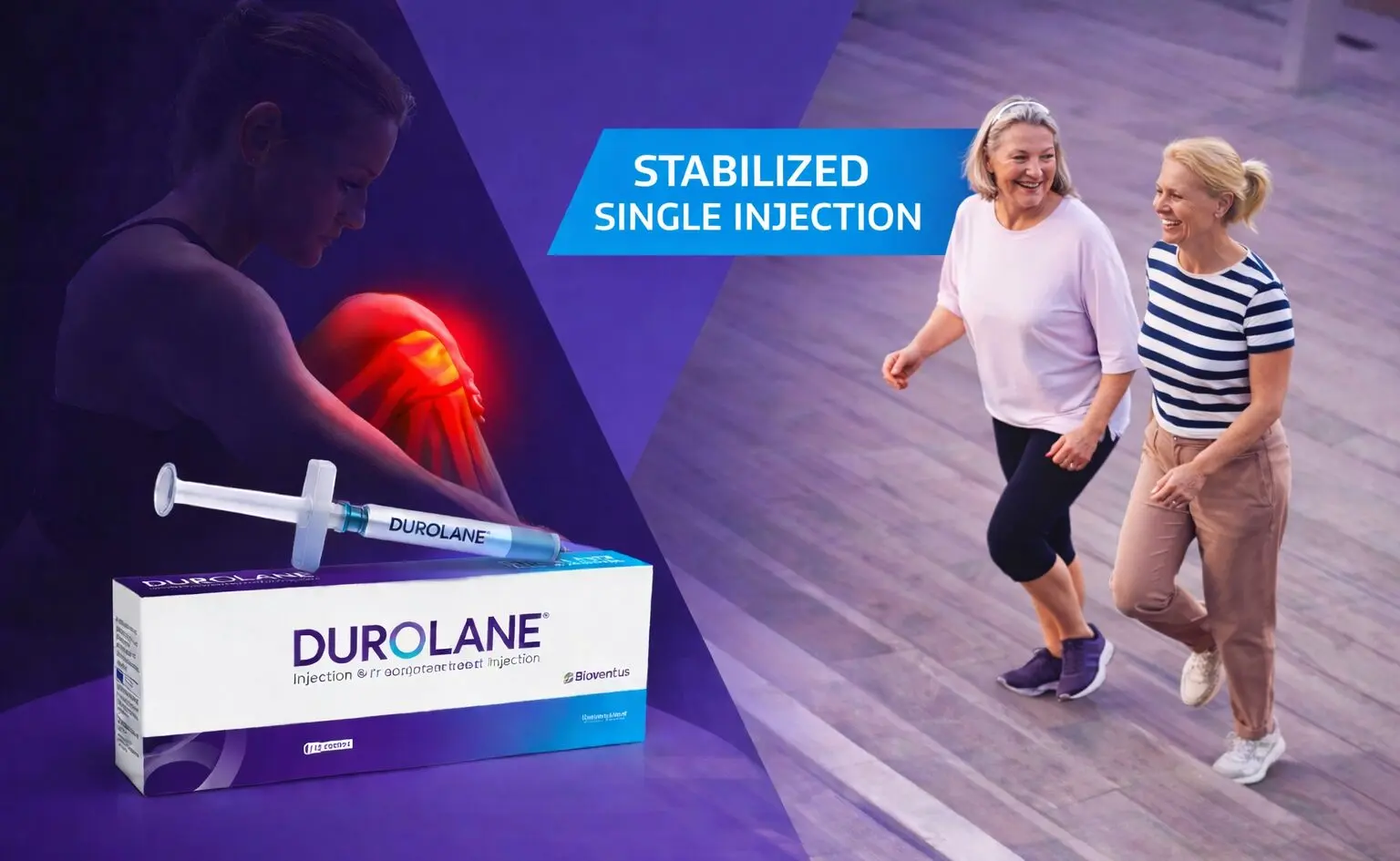
  • Durolane restores joint lubrication with synthetic hyaluronic acid
  • Helps reduce pain and protect joints affected by aging or arthritis
  • Acts as shock absorption to support smoother joint movement

What are the benefits of Durolane Injection?

Pain Relief

Reduces joint pain by restoring lost hyaluronic acid, cushioning the joint and decreasing friction during movement.

Joint Protection

Acts as a shock absorber inside the joint, helping protect cartilage from further wear caused by aging and arthritis.

Improved Mobility

Enhances lubrication for smoother motion, making everyday activities more comfortable and easier.

What are the side effects?

Hyaluronic Acid is highly biocompatible, but some mild reactions may occur.

Common Side Effects
  • Pain after injection: A post-injection flare occurs in up to 11% of patients (Puttick 1995; Pullman-Moor 2002). Similar to steroid injections, it usually settles within 2 days. Application of ice and simple pain medications (e.g. Tylenol, Advil) can help, if desired.
  • Pain during the procedure: The skin is the most sensitive part when it comes to any injection. We minimize this by using local anesthetic and/or a vapocoolant spray on the skin. Pain associated with the injection is usually brief and well-tolerated.
Systemic Side Effects
  • No specific reactions have been described.
Not Common / Severe
  • Infection: When a needle is passed through the skin into the body, there is a very small chance of introducing a joint infection. The chance of this occurring is extremely low, less than 0.002%, or equivalent to being struck by a car as a pedestrian and experiencing a catastrophic event. To minimize this risk, we not only follow the WHO minimum best practice standards for injections, but use sterile gloves, sterile ultrasound probe covers, and sterile ultrasound gel.
  • Allergy: A swelling reaction to the local injectate can occur at the site of administration. We ask all patients to remain in the clinic waiting room afterwards for a minimum of 15 minutes to observe for any adverse reactions to the medication. An allergic reaction is more likely with repeated injections.
  • Bleeding: This is a greater risk if you have a known bleeding disorder or are taking blood thinners. By using ultrasound guidance, there is less “poking” around to get to the target tissue of interest, and thus less theoretical risk of bleeding. Pressure is maintained over the skin afterwards to reduce bleeding.

FAQs

Pain relief is intended to occur within a few weeks. If more rapid control is required, the injection can be combined with steroid. The overall length of relief is variable, lasting anywhere from 4-6 months.

Previous formulations required weekly administrations of hyaluronic acid for a specified treatment period. We now have one-injection only formulations that can be performed every 4-6 months, so long as it fits with the patient’s overall goals, lifestyle, and expectations.

If joint replacement surgery is planned: If steroid is provided, the same protocol for steroid injections apply (see steroid injection section). If no steroid is provided, there are no restrictions when it comes to joint replacement surgery. Any patient who may appear to have: Infection within the body, near the site of administration, or the actual joint itself

We recommend bringing a driver with you if you’re scheduled for an ankle or foot injection. Otherwise, most people can drive afterwards. Nonetheless, we ask all patients to remain in the clinic waiting room for a minimum of 15 minutes afterwards to observe for any adverse reactions to the medication.

This depends on the type of sport and intensity, but we generally recommend taking it easy for 2 days as post-injection flares may occur. If steroid was provided, this takes effect after day 2. Overall, please be mindful with anything you do and listen to your body.

Ready to reclaim your active lifestyle?

Please see our fees and financing for more information.

Patient Resources

Insurance Reimbursement Guide 2020

755 Queensway East

Mississauga ON L4Y 4C5

REHABILITATION SERVICES

Unit 303: Physiotherapy, Massage Therapy,
Chiropractic, Custom Bracing, DEXA Body Scans

Mon, Wed, Fri : 8 am to 7 pm
Tues, Thurs : 8 am to 5 pm
Sat to Sun : Closed

MEDICAL SERVICES

Unit 303: Rheumatology, Neurology, Psychiatry, Lifestyle Medicine
Unit 304: Physical Medicine, NCS/EMG, US-Guided Injections

Mon to Fri : 8 am to 5 pm
Sat to Sun : Closed
(Hours and availability may vary)

Book Therapy